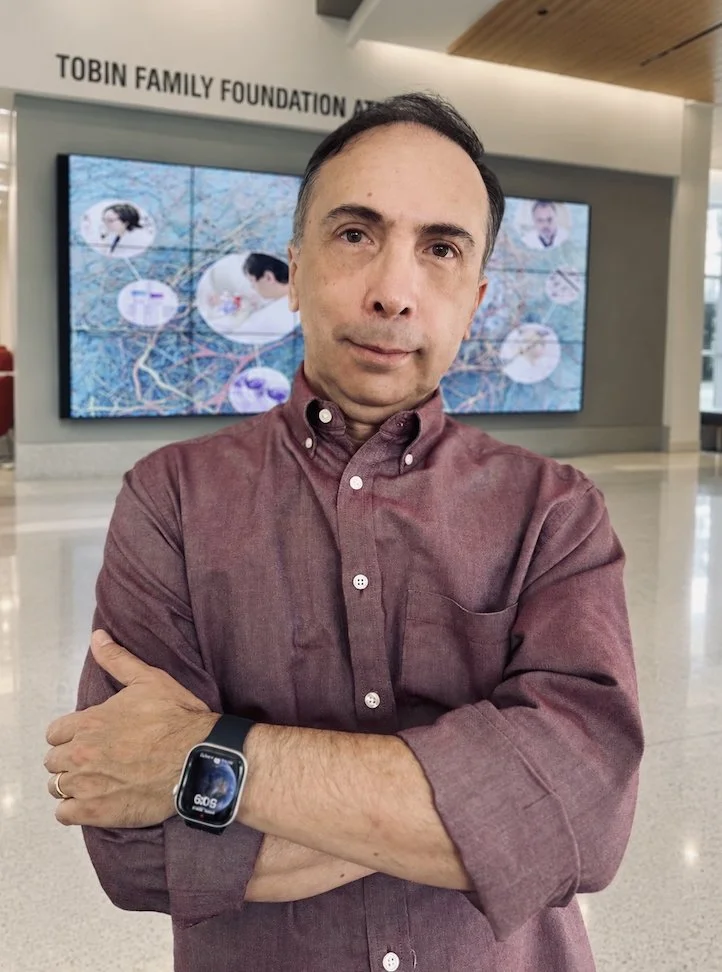
Antonio Chavez, PhD
Senior Staff Scientist
Antonio has a longstanding interest in understanding how cellular metabolism regulates signaling, cell function, and disease. He received his B.S. in Biology from Universidad Peruana Cayetano Heredia in Peru and his Ph.D. in Biochemistry and Molecular Biology from Colorado State University. He completed postdoctoral training at Dartmouth Medical School, where he studied insulin signaling and the molecular mechanisms regulating GLUT4 trafficking in adipocytes and skeletal muscle cells. His work focused on understanding the regulation of insulin-stimulated glucose transport.
He subsequently conducted research at Duke University with Dr. Scott Summers, investigating how dysregulation of bioactive lipids, particularly ceramides, contributes to insulin resistance and metabolic disease associated with obesity.
Antonio then spent approximately ten years in the Cardiovascular and Metabolism group at Janssen R&D, where he led the in vitro pharmacology efforts supporting drug discovery for metabolic diseases, including obesity and diabetes, and related co-morbidities such as MASH, CKD and AKI. He also contributed to the identification and validation of new metabolic disease targets. Among his contributions, he co-led the discovery of GFRAL as the receptor for GDF15 and directed studies defining its signaling mechanism, work that resulted in a Nature Medicine publication and patent filings.
More recently, as a Principal Scientist at Quotient Therapeutics, Antonio led translational biology and pharmacology studies using disease-relevant models and genetic perturbation approaches to identify and validate therapeutic targets for metabolic liver disease. His worked helped advance multiple RNA-based therapeutic programs and further strengthen his interest in understanding how metabolic pathways control cellular phenotypes and disease states.
Antonio joined the Aird Lab at The Wistar Institute in 2026 as a Senior Staff Scientist to expand his research into cancer metabolism. He is interested in understanding how metabolic rewiring shapes cancer behaviors and created context-specific vulnerabilities that may reveal new therapeutic opportunities.
Contact Antonio: jchavez@wistar.org